How do you like your eggs in the morning?

Poached eggs and asparagus

I can’t take much of the credit for this because my boyfriend cooked the eggs using the tips from a TV programme he saw and I cooked the asparagus!  However, I decided to use lemon juice and not vinegar and it actually worked!  I thought, I should really write this down or else I’m going to forget how to do it next time.

The other thing to note is that if you use an electric oven then it’s very difficult to keep a steady temperature, my hobs go up to 6 and we had to hover between 3 and 4 to keep the bubbles going but avoiding a rolling boil.

The other thing to note is that your eggs should be as fresh as possible.  The less fresh they are, the more runny the egg white is and less likely it is to keep together rather than spread out all over the pan.  You can test fresh eggs by making sure they sink to the bottom of a glass of water, or just use ones you’ve bought recently.  If you’re fortunate to get them straight from the hen, all the better!

blog 015.JPG

Serves 2

1 lemon

2 eggs

14 sticks of asparagus

1 tbsp olive oil

Salt and Pepper

  1.  Juice the lemon and boil the kettle.
  2. Heat one hob to a medium heat and place on there a medium saucepan with the boiled water in it.
  3. Heat another hob to a medium -high heat and put on a griddle pan.  Drizzle over the olive oil.
  4. Simmer the water so that there are bubbles are the bottom but surface is pretty much flat.  Keep it at that state by altering the hob dial as you go.
  5. Put one egg, still in its shell, in the water and roll it around with a spoon for 10 seconds.  Put to one side on a plate and do the same with the other egg.
  6. Add the asparagus to the griddle pan at this point, cook for 3-4 minutes turning halfway through.
  7. Meanwhile, add the lemon juice to the water and stir gently.
  8. Then crack the eggs into the water one at a time and simmer gently for 3 minutes.
  9. Bring together any stray egg white with a metal spoon.
  10. Arrange the asparagus onto plates.
  11. When the time is up, place the eggs on top of the asparagus and season with a pinch of salt and pepper.


Yoghurt, nut, seed and berry bircher

Yoghurt, nut, seed and berry bircher

I was getting a bit fed up of apple porridge every day so I decided to make a bircher.  Also the weather is getting warmer and we are getting into berry season.  Make sure that you make the yoghurt mixture the night before you want to eat it.  The mixture will soak up the millet and soften the seeds.

The yoghurt mixture seems a little sloppy at first but when you refrigerate it overnight, it thickens up.  I did start by using only yoghurt but not only was this expensive, it also had a bit of a cement like consistency – not good!  This is perfect as it has 2 tablespoons of yoghurt which is exactly the amount my nutritionist advised that I eat on a daily basis.  Providing it was natural, full fat, live yoghurt of course!  RNI of calcium is 700mg and this has about 110g of calcium in it which is a good start!

I don’t actually measure out 120ml of water, I have a 1/3 cup measure (79ml) which I use for the millet and add a full and about a half measure of water using the same container.

You can use a jar but I use tupperware for convenience.  It also means you can grab your breakfast and run out of the door and eat it at work or after a workout.

food blog 026

Serves 1

1/3 cup of millet

120ml of water (or 1/3 cup + half of the 1/3 cup)

2 tbsp full fat live yoghurt

2 tsp each of pumpkin seeds, sunflower seeds and golden linseed

10 pistachio nuts, shelled

A handful of fresh berries e.g. about 3 sliced strawberries, 5 raspberries, 12 blueberries.

  1.  Mix the millet, water, yoghurt, nuts and seeds together and place into a container and put into the fridge overnight.
  2. In the morning, add the fresh berries and serve.
  3. Delicious!


Refried Beans, Coconut Green Rice, Grilled Peppers and Avocado

Refried Beans, Coconut Green Rice, Grilled Peppers and Avocado

I decided to cook this to use up some ingredients I had in the fridge but it turned out rather tasty so I will write it down and definitely cook it again!  The refried beans I have cooked many times and go well with tacos if you want to skip the meat as well.  I don’t add any spices to the beans as I just enjoy the sweetness from the onion to flavour them but you could use spices such as cumin, coriander, smoked paprika if you wanted an extra kick to the recipe.  The good thing about having things like limes, coriander, coconut milk and peppers in the house is that you can go either way – Thai or Mexican!  As you might have guessed – two of my favourite cuisines!

blog 048

Serves 1

Rice:

60g brown rice

75g spinach

a handful of fresh coriander

1 tbsp coconut milk

Refried Beans:

1 onion

3 tsp of olive oil

1 clove of garlic

1 can of kidney beans

100ml vegetable stock

salt and pepper

Sides:

1/2 each of two different coloured peppers

1/2 avocado

1/2 lime

salt and pepper

fresh coriander to garnish

  1.  Boil the kettle and heat up 2 hobs, preheat the grill to medium high.
  2. Put the rice into plenty of boiling water, bring up to the boil and then simmer for 25 minutes
  3. In the meantime, prepare everything else.
  4. Blitz the coriander and spinach in a food processor until fine
  5. Heat 2 tsp oil in a small saucepan and then turn down to low (3).
  6. Dice the onion and add to the saucepan to slowly cook through for 10 minutes until translucent.  Any time the pan gets too hot or there is no oil left, pour in a splash of water from the kettle until it has evaporated or been absorbed.  We want the onions soft and sweet not crunchy.
  7. Meanwhile cut 2 sides off each pepper, discard any internal flesh and cut each side into 2.  Line a grill pan with foil and put under the grill skin side up.  This should take about 10 – 15 minutes to brown.  You can either brown the skin or char it black and remove it at the end.
  8. Remove the skin and slice the avocado half.  Dress with the juice from half the lime, salt and pepper.
  9. Crush in the garlic into the pan of onions and stir fry for 1 minute.
  10. Drain and rinse the beans in a colander and add to the pan with the stock.  Turn up high and cook for about 5 minutes until nearly all of the stock has evaporated or been absorbed.
  11. Add a pinch of salt and pepper  and mash in the pan.  Then add the last teaspoon of oil and a splash of water if it looks too dry and refry the beans on a medium heat.
  12. Drain the rice when ready and return it to the pan.  Stir in the spinach and coriander mixture and the coconut milk.  Return to the hob to heat through for a minute.
  13. Arrange all on a plate and serve.

Broccoli, Almond and Tahini Soup

Broccoli, Almond and Tahini Soup

This soup was a happy accident.  I forgot I already bought broccoli and also had some leftover.  It’s a great way to use up leftovers and surprisingly filling.  I also realised recently that almonds have quite a bit of protein in them so that’s probably the reason.  It was delicious!  If you have the vegetable stock already made and in the freezer it’s also very quick to make.

blog 020

Serves 2

2 heads of broccoli

100g whole almonds

10g butter (optional)

1 1/2 tsp tahini

400ml hot vegetable stock

Salt to taste

  1.  Cut off the florets from the head of broccoli so you’re just left with the stalks.  Set aside.
  2. Trim off any gnarly bits from the stalks and chip into large chunks (5cm long)
  3. Boil and then simmer the stalks and almonds in water with a pinch of salt for 15 minutes.
  4. Add the florets and simmer for a further 5 minutes.
  5. Drain and reserve some of the cooking water.  Put the vegetables and nuts back in the pan.
  6. Add the stock and butter and blitz with a hand blender until it is as smooth as you can get it.  The almonds will remain a little chunky.
  7. Season to taste.  If it’s looking a little thicker than you would like, add in the reserved cooking water.
  8. Swirl in the tahini and serve.


Stuffed Peppers with Non Cheese Cheesy Topping

Stuffed Peppers with Non Cheese Cheesy Topping

This week I’m trying to eat more vegetarian food for my health, my wallet and for ethical reasons.  However, whenever I eat veggie I try and make sure that I get protein from another source.


Serves 2

1 tbsp olive oil

1 onion

1 clove garlic

1/2 tsp dried basil

1/2 tsp dried oregano

50g brown rice

1 can quality chopped tomatoes

1 tbsp tomato puree

700ml boiled water

50g red lentils

3 large or 4 medium red peppers

1 courgette

Salt and pepper

Topping

1/2 tbsp olive oil

1 leek

90g celeriac

4 sun dried tomatoes

4 sprigs of thyme

5 tbsp creme fraiche

To serve

1 aubergine

Salt and Pepper

100g spinach

Pinch of grated nutmeg

Splash of boiled water

  1. Preheat the oven to 200C.
  2. Heat 1/2 tbsp olive oil in a medium saucepan on the hob.
  3. Peel and finely chop the onion.  Saute in the saucepan on a medium heat for 5 minutes.
  4. Fill and boil the kettle
  5. Crush in the garlic and stir fry for a further minute
  6. Add the tomatoes, tomato puree, herbs, salt and pepper, 700ml of boiled water and rice.  Bring to the boil and simmer for 40 minutes until the rice is cooked.  Add the lentils 20 minutes before the end.  You can cook let this cool if it’s ready too soon as it will be baked in the oven at the end.
  7. Meanwhile, heat the rest of the oil (1/2 tbsp) in a medium saucepan on a medium heat.
  8. Slice the courgette into 5mm slices and each slice into quarters.  Saute for 10 minutes then set aside.
  9.  While the courgette is cooking start to prepare the peppers.  Cut each pepper into half and remove the stalk and the seeds.
  10. Line a baking tray with foil and place the peppers face down onto it.  Roast in the oven for 10 minutes and then leave on the side to cool.
  11. Cut the aubergines in half lengthways and each half into 3 wedges.  Rub with oil, sprinkle over salt and pepper and bake in the lower part of the oven for 8 minutes with the skin side down and then 4 minutes on each side.
  12. Heat the oil for the topping in a large saucepan on a medium high hob.
  13. Roughly chop the leek into small pieces as well as the sun dried tomato.  Cut off the tough outer edge of the celeriac and grate.  Pick the leaves from the thyme.
  14. Stir fry the leek, sun dried tomato, celeriac and thyme in the oil for 4 minutes.
  15. Add the creme fraiche and stir fry for another 2 minutes.
  16. Blitz the topping in a food processor until it’s as smooth as is possible.
  17. Stir the courgettes into the rice, tomato and lentil mixture.  Fill the pepper halves with the mixture right to the top.
  18. Spoon on the topping and roast for 10 minutes.  Warm the aubergine by putting it into the bottom part of the oven.
  19. Boil the kettle and 2 minutes before the end, put the spinach with the pinch of nutmeg in a saucepan with a splash of water and stir until wilted.
  20. Arrange on a plate and serve.


Falafel Salad with Tahini Dressing

Falafel Salad with Tahini Dressing

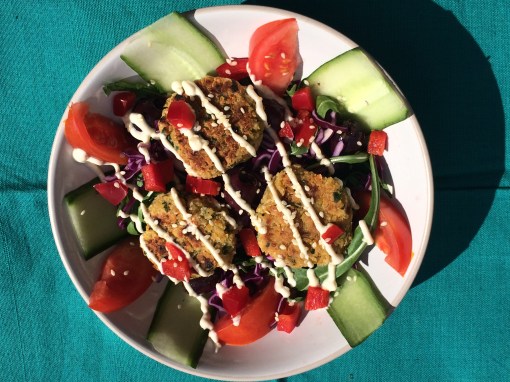
Apologies for not including the carrot in the picture, it was hiding in my grater and I completely forgot about it!

blog 012

Makes 5 lunches

Falafel

200g dried chickpeas (makes about 400g when rehydrated)

1 onion

1 clove of garlic

1 handful of fresh flat leaf parsley (leaves of)

1 handful of fresh coriander (leaves of)

1/4 tsp salt

1/2 tsp cumin

1/2 tsp coriander

A pinch of cayenne pepper

A pinch of all spice

10 cardamom pods

1 egg

1 1/2 tbsp olive oil

Salad

1 large carrot

2 red peppers

1/2 cucumber

5 medium sized tomatoes

1/2 red cabbage

70g rocket

15-20 kalamata olives

Dressing

1 lemon

2 1/2 tbsp live full fat yohurt

2 tbsp tahini

To serve

1 tbsp sesame seeds

  1. Soak the chickpeas overnight.
  2. In the morning, wash through twice, put on the boil and simmer for 45 minutes until soft
  3. Put a small frying pan on a medium heat and add 1/2 a tbsp of the oil
  4. Dice the onion and saute on a medium heat for 5 minutes
  5. Crush the garlic clove into the same pan and saute for a further minute
  6. Use a pestle and mortar to grind the cardamom pods and remove the outer shells.
  7. Drain the chickpeas and add with the cooked onion, garlic, cardamom and all the other ingredients for the falafel apart from the oil into a food processor.  Blitz until everything is mixed but still slightly chunky.
  8. Shape into small balls (about 4cm in diameter) and flatten slightly to make a patty.
  9. Put a clean frying pan on a medium heat, add a little more oil and fry the falafel.  The ones in the centre need only 3 minutes per side but as you move the ones that are done to the edge, the others will need a little longer.  Add a little oil at a time so it isn’t soaked up all at once.
  10. Once done leave the falafel to cool.
  11. Slice the red cabbage into wedges and remove the stalk.  Using a mandolin on the thinnest setting, shred the cabbage.
  12. Cut the cucumber into 3 and slice each piece lengthways using the mandolin on the thickest setting.  Cut each tomato into quarters and remove the stalk.  Slide each quarter into 3 slivers.
  13. Peel, top, tail and grate the carrot.
  14. Remove the stalk and seeds from the peppers and dice small (about 5mm)
  15. Squeeze the juice from the lemon into a bowl, add the yoghurt and tahini and stir vigorously.
  16. Arrange the salad (not forgetting the rocket and olives) with the falafel on top, drizzle over the dressing and sprinkle over the sesame seeds.

Wholemeal Spelt Tagliatelle with Roasted Aubergine and Tomato

Wholemeal Spelt Tagliatelle with Roasted Aubergine and Tomato

Sorry to labour the point about good quality tomatoes but it makes all the difference!  I used wholemeal spelt tagliatelle in this recipe but if you can’t find it, use wholemeal tagliatelle instead, I know they definitely sell it in Sainsbury’s.  I managed to find wholemeal spelt pasta in Rome and also in Home Sense!  Both times it gave the ingredients in Italian: farina di farro.  This is a quick, simple recipe and really good after doing exercise.  I garnished with fresh marjoram as I have it growing in my garden and it tastes a little like oregano but this is optional!

blog 005

Serves 1

1 aubergine

1 tbsp olive oil

2 medium good quality fresh tomatoes

1/2 can good quality chopped tomatoes

2 balls of wholemeal tagliatelle/100g other wholemeal pasta

1 tsp dried oregano

salt and pepper

  1. Preheat the oven to 200C
  2. Chop the aubergine into 1cm thick rounds and then cut right across each round 3 times to make into bite sized segments.
  3. Put the aubergine into the medium sized roasting tin and drizzle with the oil and season.  Toss through the with your hands to ensure everything is evenly coated.
  4. Put into the oven and set the time for 10 minutes.
  5. Meanwhile chop each tomato into quarters, remove the green part of the core and chop each quarter into 2.  Season with salt and pepper.
  6. Boil the kettle for the pasta and preheat a hob at a medium heat (4).
  7. 2 minutes before the aubergine timer has finished, add the boiled water and pasta to a medium saucepan on the hob.  Bring to the boil and simmer for 12 minutes or until the pasta is al dente.
  8. Once the 10 minutes is up, bring the aubergines out of the oven and use a fish slice to scrape them up and turn them over.  Add the fresh tomatoes and return to the oven for 8 minutes.
  9. Once the 8 minutes are up, take the roasting tin out of the oven, pour in the canned tomatoes, mix and return to the oven for 2 minutes.
  10. One the pasta is cooked, drain.  Take the tin out of the oven, add the pasta and oregano to the sauce and mix so that the pasta absorbs all of the lovely flavours.
  11. Plate up and enjoy!


Creamy BBQ Beans

Creamy BBQ Beans

blog 047

Serves 2 as a side

1 tbsp olive oil

1/2 onion

1 clove garlic

1 can haricot/cannelloni beans drained

1/2 can good quality chopped tomatoes

1 tsp smoked paprika

1 tsp dried thyme

1/2 tsp ground coriander

1/2 tsp mustard powder

pinch of salt and pepper

1 tbsp creme fraiche

1 tbsp of coriander leaves

  1.  Heat the oil in a large saucepan on a medium hob (3)
  2. Finely dice the onion
  3. When the oil is hot, saute the onion for 5-10 minutes until it is soft
  4. Add the garlic and stir fry for 1 minute
  5. Add all of the other ingredients, stir and leave it simmer for 20 minutes to bed in the flavours.  Stir every now and then.
  6. Halfway through, if it is getting a little dry, add a splash of recently boiled water
  7. At the end stir in the creme fraiche and top with the coriander leaves.  If you don’t like a big hit of coriander you can always chop these finely and add.
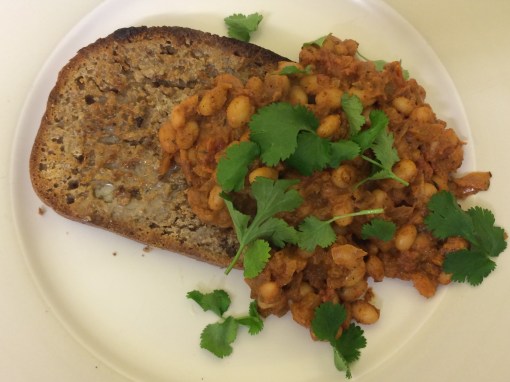
  8. Serve with sourdough toast, steam green vegetables or omelette.


Vegetable Stock

Vegetable Stock

This is quick and easy to make.  I don’t have a recipe to use it with yet, I’ve been experimenting a bit but haven’t come up with anything tasty enough.

Blog 006

Makes 500 – 700ml

1 large carrot

1 large onion

1 large leek

2 sticks of celery

15 peppercorns

2 bay leaves

1/2 tsp salt

6 parsley stalks

2 sprigs of thyme

1 litre of boiled water

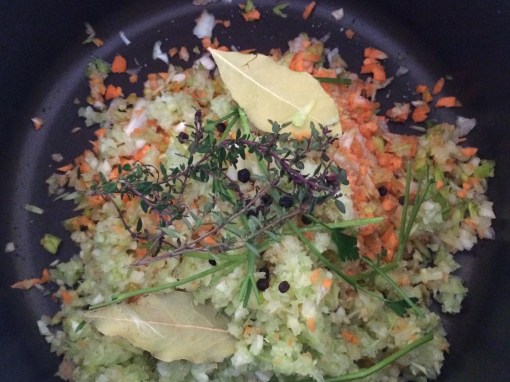
  1.  Top and tail and peel the carrot, onion and leek.  Top and tail and wash the celery.
  2. Cut a slit in the top of the leeks and wash out any mud.
  3. Chop all of the vegetables into chunks and blitz in the food processor.
  4. Add with all the other ingredients in a large saucepan.
  5. Bring to the boil and put on a rolling simmer for 30 minutes.
  6. Pour into a sieve over a bowl and press.  Leave for 10 or so minutes to get the maximum amount of stock from the ingredients.  Discard or compost the remnants in the sieve.


Adventures in Sourdough

Adventures in Sourdough


Blog 033

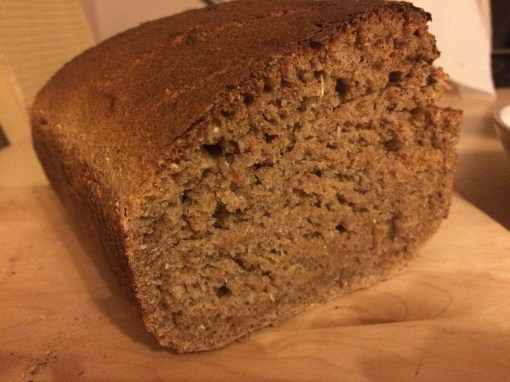
Yesterday I made my first ever sourdough loaf. I don’t know if it’s because I made everything from wholemeal spelt flour but it was absolutely delicious!  It didn’t taste at all sour and the crust on the outside was crunchy and divine!

I was missing bread and looked back through the notes my nutritionist gave me and she said that sourdough was ok!  I thought I would make it from scratch to be totally sure it had no sugar in it. I used to get it from Gails Bread shop which listed all the ingredients. This is a good option if you live in London.

The first time you make sourdough you either have to make or buy a “starter” which replaces your yeast. I made mine, it took about 14 days to make, after a couple of days, every day you have to throw half away and add more ingredients so it’s a bit of a commitment and you end up eating a lot of sour pancakes! I found the Shipton Mill website gave amazing advice for this.  Once you have your starter you don’t need to make it again but you need to refresh it once a week.

I found the recipe for the bread had to come from many sources as I was making my bread from wholemeal spelt and I didn’t want to use sugar, orange juice or honey. It also depends on the temperature of you house, your oven, your equipment and the sleepiness of your starter.  I didn’t realise until afterwards how important the final fold was. I looked at a number of you tube videos and this was the best at explaining it. Go to 8:30 minutes in https://youtu.be/be57uXRf5xo.

Makes 1 loaf

733g wholemeal spelt flour

431 warm water

10g salt

127g sourdough starter

(50g wholemeal spelt flour if you want to top up your starter)

  1.  Refresh the starter 12 hours before you start cooking so that it’s active.
  2. Add the starter and water to the food processor bowl, stir.
  3. Add the flour and mix with a dough hook on the food processor.  I couldn’t find my dough hook but I had something that had plastic “blades” instead of metal ones and that worked fine.  Mix until it forms a dough and the edges of the dough naturally move away from the sides.
  4. Leave to prove for 30 minutes.
  5. Meanwhile if you want to top up your starter its 50g wholemeal spelt flour, 76g warm water
  6. Add the salt and mix for 2 minutes in the food processor.  You don’t want to overknead as you’re using spelt instead of flour so the gluten is more likely to break up.
  7. Put the dough on the table and briefly knead whilst feeling the consistency.  It should be sticky but not sloppy.  It shouldn’t leave a residue on the work surface as you knead. Add more flour if needs be.
  8. Oil a glass bowl and place in there with clingfilm over the top.  Take a photo of the side and the top so you can see when it’s doubled in size.
  9. Leave in a warm dark place for 5 hours.  I used my airing cupboard.
  10. Knead for 3 minutes.  Again, you don’t want to overknead.  When it feels like an elastic band that’s lost its elastic, stop immediately.
  11. Line a bread tin with a tin liner.  I used a non stick silocone liner.  You can get these from John Lewis or Lakeland.
  12. Go to 8:30 minutes in https://youtu.be/be57uXRf5xo to see how to fold the dough.
  13. Place in the tin and cover with a tea towel.  Let it rise again for 3 hours, keep an eye on it, it should almost reach the top of the tin liner.
  14. 20 minutes before the 3 hours is up, preheat the oven to 220C.
  15. Spray about 10 squirts of water in the oven to increase the humidity.  Bake for 30 minutes.
  16. Leave to cool on a cooling rack before serving.
  17. Serve with no added sugar peanut butter, homemade chicken liver pate, hummus or just plain butter.


DMCA Copyright Protected

© Elizabeth Winson and Raspberry Sundays, 2014 - 2016. Unauthorised use and/or duplication of this material without express and written permission from this site’s author and owner is strictly prohibited. Excerpts and links may be used, provided that full and clear credit is given to Elizabeth Winson and www.raspberrysundays.com with appropriate and specific direction to the original content. DMCA.com Protection Status